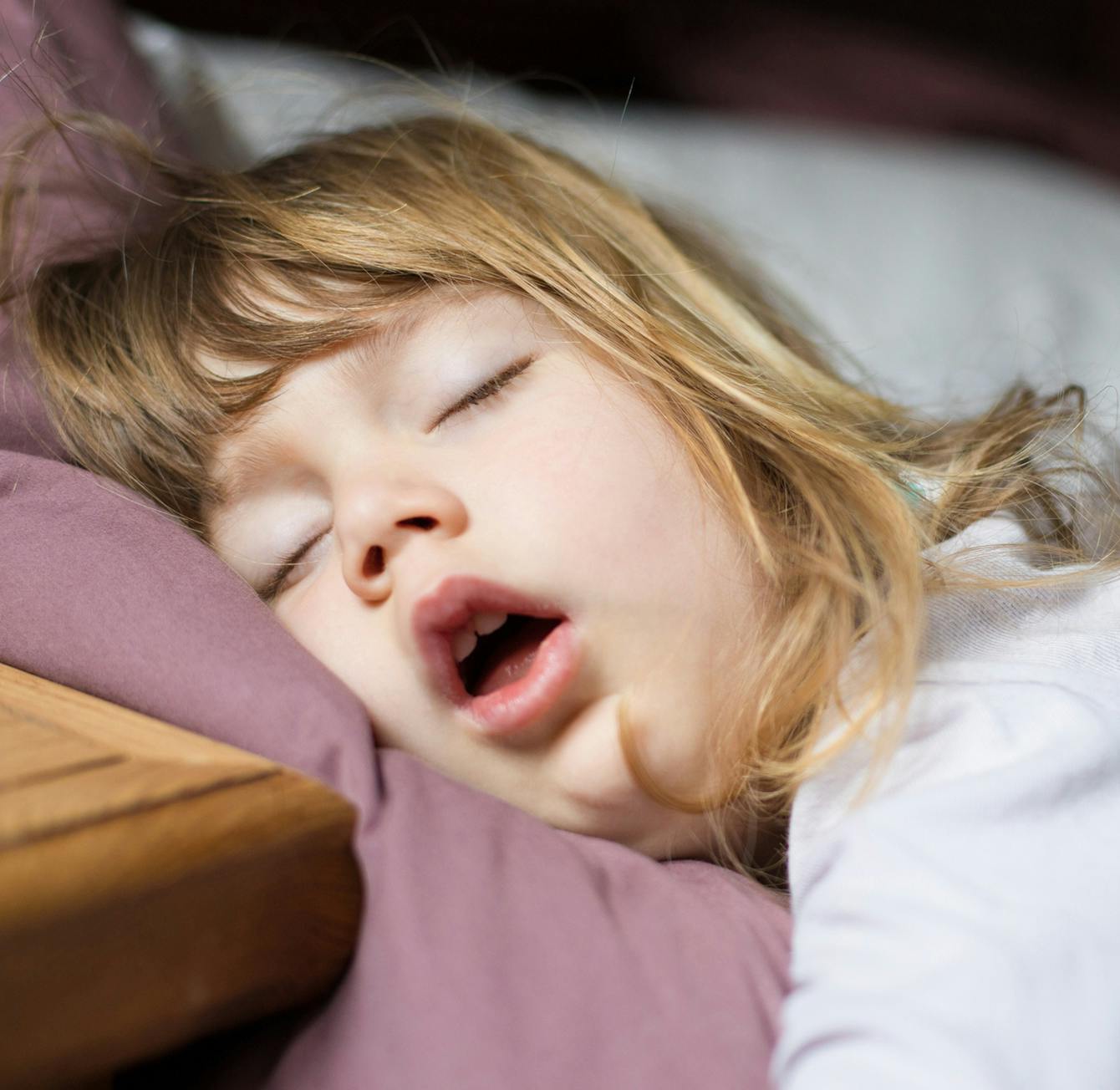
Pediatric sleep-disordered breathing is a group of conditions in which a child’s breathing is partially or repeatedly obstructed during sleep, leading to disrupted rest, decreased oxygen levels, and potential effects on growth, behavior, and overall health.

What Are the Symptoms of Pediatric SDB?
Potential symptoms and consequences of untreated pediatric SDB may include:
- Snoring—The most obvious symptom of SDB is loud snoring that is present on most nights. The snoring can be interrupted by a complete blockage of breathing, with gasping and snorting noises associated with waking up from sleep. Loud snoring can also become a significant social problem if a child shares a room with siblings, or at sleepovers and summer camp.
- Irritability—A child with SDB may become irritable, sleepy during the day, or have difficulty concentrating in school. He or she may also display busy or hyperactive behavior.
Bedwetting—SDB can cause increased urine production at night, which may lead to bedwetting (also called enuresis). - Learning difficulties—Children with SDB may become moody and disruptive, or not pay attention, both at home and at school. SDB can also be a contributing factor to attention deficit disorders in some children.
- Slow growth—Children with SDB may not produce enough growth hormone, resulting in abnormally slow growth and development.
- Cardiovascular difficulties—OSA can be associated with an increased risk of high blood pressure or other heart and lung problems.
- Obesity—SDB may cause the body to have increased resistance to insulin, and daytime fatigue can lead to decreased physical activity. These factors can contribute to obesity.